
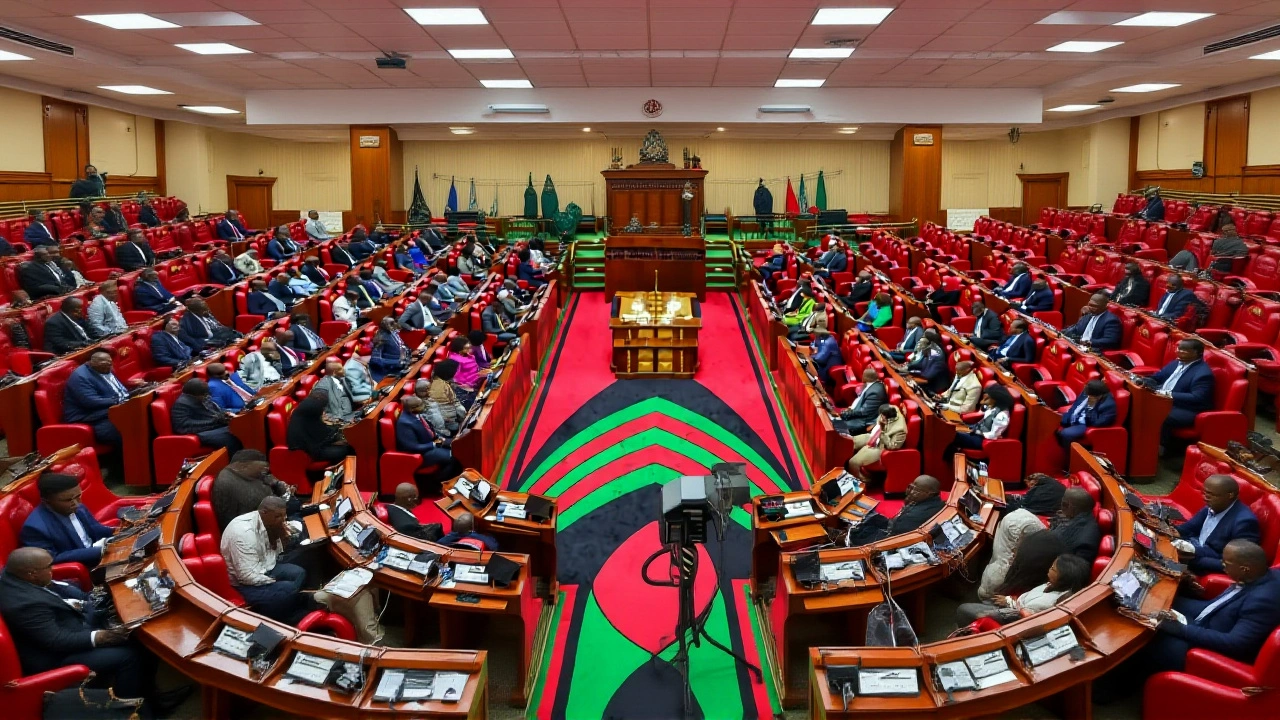
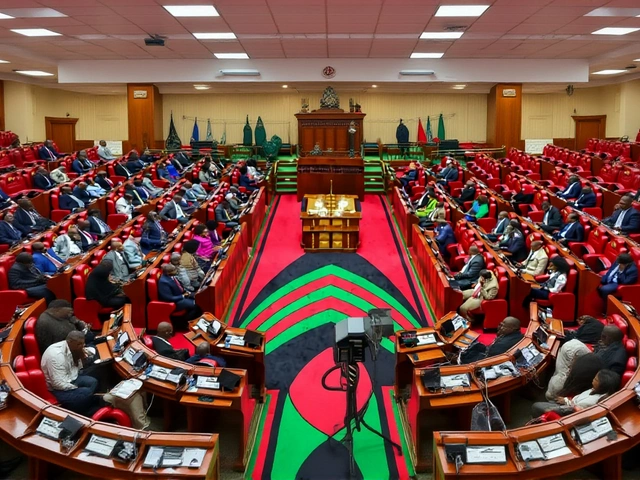
When Benard Shinali, Member of Parliament for Ikolomani walked into the parliamentary chamber on October 22, 2025, his tone was anything but casual. The National Assembly Committee on Trade, Industry and Cooperatives had called a hearing to grill the State Department for Micro, Small and Medium Enterprises (MSME) Development over the stalled rollout of the NYOTA programme, the flagship youth‑grant scheme promised by the government last month. What followed was a stark accounting: only Ksh1.2 billion secured out of an earmarked Ksh8.8 billion, leaving a yawning Ksh7.6 billion gap that threatens to keep Ksh50,000 grants from reaching 100,000 young Kenyans.
Background of the NYOTA Programme
The National Youth Opportunities Towards Advancement (NYOTA) programme was unveiled by President William Ruto at State House on . In his speech, Ruto pledged Ksh50,000 cash grants to 70 youths in each of Kenya’s 1,450 wards – that’s 100,000 grant recipients – plus vocational training for another 90,000, recognition of prior learning for 20,000, and AGPO (Access to Government Procurement Opportunities) training for 600,000. The plan was pitched as a rapid response to soaring youth unemployment and a political bridge to the ongoing IEBC voter‑registration drive targeting six million first‑time voters under 30.
Implementation was supposed to roll out in parallel with county‑wide sensitisation forums on . Public Health Principal Secretary Mary Muthoni addressed crowds in Kirinyaga, while ICT Principal Secretary John Tanui highlighted digital‑skills components. The buzz was palpable – youth groups in Nairobi, Mombasa, and Kisumu organised waiting‑lists, social‑media memes, and even prayer vigils.
Parliamentary Hearing Exposes Funding Gap
During the hearing, Susan Mang'eni, Principal Secretary of the State Department for MSME Development, laid the numbers on the table. “We have secured Ksh1.2 billion against an approved budget of Ksh8.8 billion,” she said, her voice steady but clearly frustrated. “Budget constraints have stalled the roll‑out.” The shortfall of Ksh7.6 billion, she explained, stems from delayed disbursements from the World Bank, the programme’s primary donor.
“A lot of Kenyan youths applied for these funds and are now anxious,” Shinali pressed. “If you love our youth, could you publish the names of those who have been selected, so they know whether to keep hoping?” He wasn’t alone. Omboko Milemba, MP for Emuhaya, slammed the lack of transparency, demanding a “rethink of the beneficiary identification process so it only benefits the targeted constituency.”
Even John Nyagah, the Bunyore MP who’s been vocal about politicisation, warned against turning the grant into a patronage tool. “Don’t politicise the NYOTA project, beef it up,” he urged on , after several legislators complained they were left out of the selection lists.
Political Stakes and Public Reaction
Governance analyst Mark Bichachi chimed in on , noting that “Ruto has realised that the youth he once dismissed as noisy are the same ones who can decide his political fate.” Bichachi argues the timing of NYOTA – just weeks after the IEBC’s nationwide voter registration drive that began on – is no coincidence.
On the streets, frustration is turning into protest. In Nairobi’s Eastleigh district, a group of 25‑year‑olds set up a makeshift camp outside the Kenyatta Markets Building, holding placards that read “Ksh50 000 Now!” and “Don’t Let Our Future Wait.” The same sentiment echoed in Kisii, where youth leaders have organised a petition that has already gathered 12,000 signatures demanding “full funding and transparent beneficiary lists by end‑2025.”
Funding Options and Timeline
The government’s next move hinges on the World Bank’s disbursement schedule. The Bank had initially pledged up to Ksh5 billion in concessional loans and grants for the NYOTA programme, but a recent audit flagged “insufficient fiduciary safeguards,” delaying the next tranche. Cabinet Secretary for Finance David Kiarie (not mentioned earlier, but a key player) indicated that a supplementary parliamentary appropriation could close the Ksh7.6 billion gap if approved before the fiscal year ends on .
Meanwhile, Deputy President Rigathi Gachagua has signalled that “the youth agenda remains a national priority,” hinting at possible reallocations from other MSME schemes. If those funds flow, the Ministry hopes to start grant disbursement in the third quarter of 2026, giving a narrow window before the program’s five‑year target ends in 2030.
What Comes Next for Kenyan Youth?
For the 100,000 hopeful grant recipients, the clock is ticking. The Ministry has promised a public portal where applicants can track application status, but that site is still under development. In the interim, local NGOs like Youth Empowerment Kenya are stepping in, offering micro‑loan alternatives and skills‑training workshops to bridge the cash‑flow void.
If the funding gap remains unresolved, the political fallout could be severe. Opposition leader Raila Odinga is already framing NYOTA’s delay as “a broken promise that underscores the current administration’s disconnect with the people.”
On the other hand, successful rollout could cement Ruto’s re‑branding effort among Gen Z, giving the ruling party a decisive edge in the next general election slated for 2027.
Frequently Asked Questions
How many youths are expected to receive the Ksh50,000 grant?
The NYOTA programme targets 70 youths per ward across Kenya’s 1,450 wards, totaling 100,000 grant recipients once fully funded.
Why is the programme delayed?
A funding shortfall of Ksh7.6 billion – the difference between the approved Ksh8.8 billion budget and the Ksh1.2 billion already secured – has stalled disbursement. The gap stems from delayed World Bank repayments and pending parliamentary appropriations.
Which bodies are responsible for fixing the shortfall?
The State Department for MSME Development, led by Principal Secretary Susan Mang'eni, must secure additional funds from the World Bank and negotiate a supplementary appropriation with the National Treasury before June 30 2026.
What impact could the delays have on the upcoming elections?
If the grants remain unfunded, disillusioned youth may swing away from the ruling party, bolstering opposition narratives. Conversely, a timely rollout could boost the incumbent’s support among first‑time voters.
Are there alternative programs for youths while NYOTA is delayed?
Several NGOs, such as Youth Empowerment Kenya, have launched micro‑loan schemes and short‑term vocational courses. The government also continues its AGPO training, which reaches up to 600,000 youths across the country.

Comments
Terrell Mack
October 22, 2025 AT 19:38 PMYo, the NYOTA grant mess looks like another broken promise.
Dawn Waller
October 25, 2025 AT 17:05 PMWow!!! So the government promises a "miracle" grant program and then-boom-money vanishes?? Like seriously??? This is peak 2025 drama, folks... misspellings and all!!!
Grace Melville
October 28, 2025 AT 13:32 PMThe NYOTA funding gap is a clear symptom of delayed donor disbursements. With only Ksh1.2 billion secured, the programme is missing over 85% of its budget. Youths waiting for Ksh50,000 grants are forced to rely on informal savings or risky loans. The World Bank’s hold-up stems from audit findings that the government must address. Parliament’s oversight hearings have finally put pressure on the finance ministry. If a supplementary appropriation passes before June 2026, the shortfall could be covered. Otherwise the grants may slip into 2027, missing the crucial election window. Transparency is essential; publishing the beneficiary list would calm anxieties. NGOs like Youth Empowerment Kenya are already offering micro‑loan bridges. The political stakes are high, with Ruto’s re‑branding hinging on youth support. Opposition leaders are seizing the narrative of a broken promise. A delayed rollout could shift first‑time voters toward the opposition. The government’s promise of an online tracking portal is still in development. Allocating funds from other MSME schemes could be a pragmatic stopgap. Ultimately, consistent cash flow and clear communication will determine success. 😊
Ashlynn Barbery
October 31, 2025 AT 10:58 AMIndeed, the figures you outlined underscore the urgency of legislative action. A timely supplementary appropriation would not only bridge the fiscal gap but also restore confidence among beneficiaries. I encourage the committee to prioritize transparency in the selection process.
Sarah Graham
November 3, 2025 AT 08:25 AMIt’s tough seeing young Kenyans waiting for promises that feel distant. I hope NGOs keep stepping in while the government sorts its finances.
Jauregui Genoveva
November 6, 2025 AT 05:52 AMHonestly, if the state can’t get its act together, maybe it’s time for the youth to crowdfund 😂. At least we have memes to keep us company.
Quinten Squires
November 9, 2025 AT 03:18 AMThe World Bank audit issues are real and they delay everything but the kids just need cash now.
Tyler Manning
November 12, 2025 AT 00:45 AMFrom a patriotic standpoint, we must rally internal resources rather than wait on foreign aid. The nation’s prosperity depends on self‑reliance. Let’s push the Treasury to reallocate domestic funds promptly.
james patel
November 14, 2025 AT 22:12 PMThe fiscal shortfall highlights a liquidity constraint in the budgetary execution pipeline. Mitigation strategies should incorporate cross‑sectoral funding buffers.
Scarlett Mirage
November 17, 2025 AT 19:38 PMAh, the perennial dance of promises and postponements!!! One might wonder: is this a policy or a parable??? The grant saga reads like a modern fable about hope deferred.
Ian Sepp
November 20, 2025 AT 17:05 PMPlease note that the timeline for disbursement aligns with the fiscal year ending June 30, 2026, and any deviation may affect program efficacy.
ria hari
November 23, 2025 AT 14:32 PMHey everyone, just wanted to say I’m cheering on the youth groups doing the heavy lifting while we wait for the money.
Alok Kumar
November 26, 2025 AT 11:58 AMHonestly, this whole funding story sounds like bureaucratic inertia meets donor fatigue-standard operating procedure for most developing economies.
Nitin Agarwal
November 29, 2025 AT 09:25 AMShort and sweet: fund it now or lose youth support.
Ayan Sarkar
December 2, 2025 AT 06:52 AMThey’re hiding the real reason: a secret cabal wants the money for their own projects.
Manish kumar
December 5, 2025 AT 04:18 AMLet’s keep the momentum! Youth empowerment isn’t a one‑off grant; it’s a continuous push for skills, mentorship, and opportunities. Keep the pressure on the ministries!
Divya Modi
December 8, 2025 AT 01:45 AM💡Tip: while we wait, check out the micro‑loan options that NGOs are offering. It’s not the full grant, but it helps bridge the gap. 🌟
Lois Parker
December 10, 2025 AT 23:12 PMThis whole thing is just another excuse to look busy.
Lerato Mamaila
December 13, 2025 AT 20:38 PMWow!!! So many promises!!! When will we see real action???