
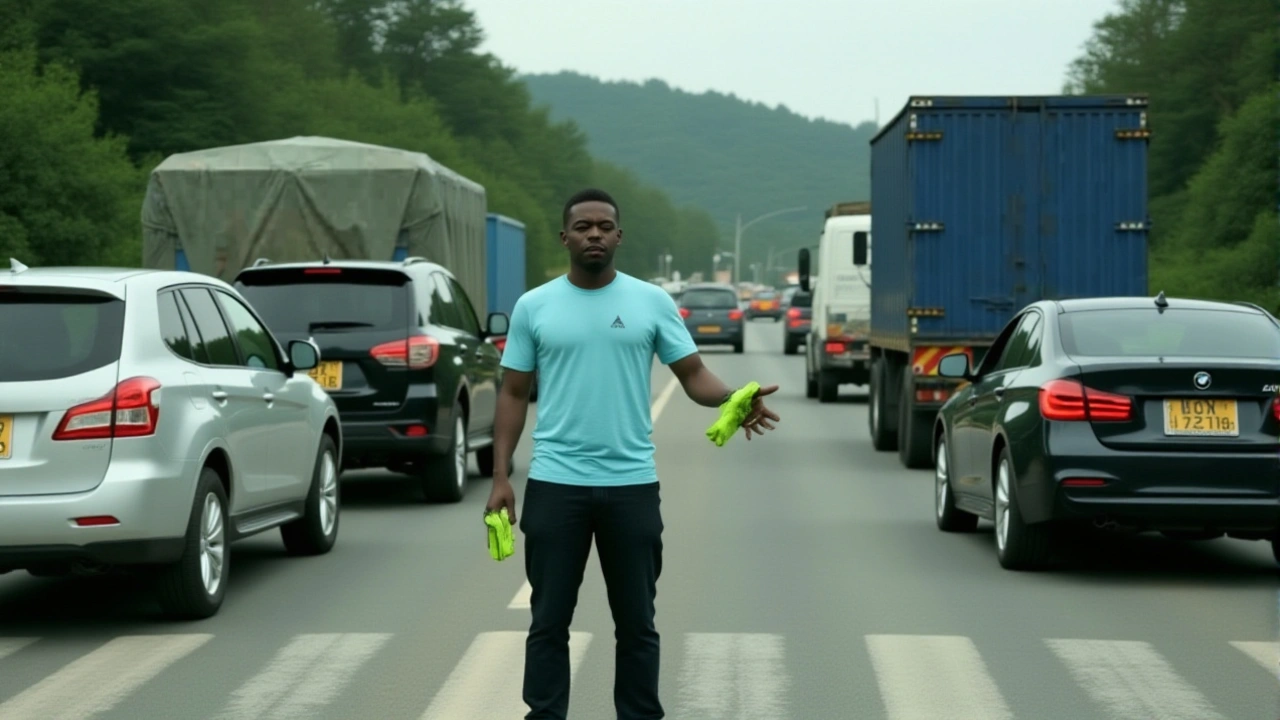
When Kenya National Highways Authority announced its plan to toll the Sh200 billion Rironi–Nakuru–Mau Summit Expressway on November 5, 2025, it didn’t just lay out a road project—it ignited a national debate about who gets to move freely in Kenya. The expressway, set to upgrade 174 to 175 kilometers of the A8 road from Rironi to Mau Summit and 54 to 58 kilometers of the A8 South link to Naivasha, promises faster travel, safer journeys, and reduced fuel costs. But for many Kenyans, especially those who rely on daily commutes or operate small transport businesses, the real question isn’t about efficiency—it’s about access. Tolling could turn a vital corridor into a luxury lane, leaving those without disposable income stranded on crumbling, congested alternatives.
The Promise of Transparency—and the Fear of Exclusion
KeNHA insists it’s not building a highway for the rich. Acting Director General Eng. Luka Kimeli told reporters on November 5 that alternative routes will be mapped and maintained for those who refuse to pay. "The usage of the toll road shall be cheaper due to resultant savings in travel time, vehicle operating costs, and safety," he said. But here’s the twist: those alternatives don’t yet exist in any meaningful form. The current roads parallel to the expressway—dusty, potholed, and often flooded—are already overloaded. Many motorists say upgrading them would cost less than building a toll road, and yield more equitable results.KeNHA’s statement claims tolls will follow a "regulated tariff framework," ensuring affordability while letting the private partner recover costs. But affordability is relative. A trucker hauling goods from Mombasa to Kampala might save Sh3,000 in fuel and time by using the new highway. But if the toll is Sh2,500? That’s nearly a day’s wage for many. And there’s no guarantee the savings will outweigh the cost. The National Social Security Fund (NSSF) and China Road and Bridge Corporation (CRBC) are the preferred proponents, but the final contract hasn’t been signed. That means the toll rates are still theoretical—and the public has no say in them.
Who’s Really Paying for This?
The Rironi–Nakuru–Mau Summit Expressway is part of the Northern Corridor, Kenya’s economic lifeline. Over 70% of the country’s imports and exports flow through this route, linking Mombasa Port to Uganda, Rwanda, South Sudan, and beyond. Critics argue that tolling a corridor this critical isn’t just bad policy—it’s dangerous. Political leaders from Western Kenya, where many residents depend on informal transport and cross-border trade, have called the plan "economic apartheid."On YouTube, videos from November 7 show frustrated truck drivers and matatu operators at Rironi junction, chanting, "We didn’t vote for this road!" One driver, Samuel Mwangi, told a reporter: "I’ve been on this road for 18 years. Now they want me to pay to drive on the same road I helped maintain with my taxes?" His sentiment echoes across the region. The government hasn’t released a single map of proposed toll-free alternatives. Without one, the promise of choice rings hollow.
Meanwhile, KeNHA’s claim that the highway remains "state-owned" despite PPP financing feels like semantics. The NSSF—a public pension fund—is investing billions, meaning Kenyans’ retirement savings are being used to fund a project that may exclude them. CRBC, a Chinese state-owned firm, brings expertise but also raises questions about long-term control. Will maintenance be outsourced? Will toll revenue be reinvested locally? No one knows.
The Broader Toll on Kenya’s Social Fabric
This isn’t just about roads. It’s about inequality. Kenya already has a two-tier transport system: private cars on smooth highways, and public transport on broken backroads. Adding tolls to the most critical artery in the country risks cementing that divide. A study by the Kenya Institute for Public Policy Research and Analysis (KIPPRA) in 2023 found that 68% of low-income households in Rift Valley spend over 20% of their income on transport. The expressway could push that number higher.And the timing couldn’t be worse. With inflation still hovering near 7%, and the cost of living rising, Kenyans are already cutting corners. A Sh500 toll on a daily commute adds up to Sh15,000 a month—more than the average rent in many towns. For a minibus operator, that’s a 30% increase in operating costs. Many will pass it on to passengers. Others will quit. The result? Fewer rides, longer waits, and more people walking.
What Happens Next?
KeNHA says negotiations with CRBC and NSSF are ongoing. The PPP Committee hasn’t approved the final contract. That’s the window. Public pressure could still force changes: a phased tolling model, subsidized fares for commercial vehicles, or mandatory upgrades to parallel roads before any toll is charged. The PPP Directorate under the National Treasury must hold open consultations—not just with consultants and bankers, but with truckers, market women, and students.Construction hasn’t started. No one has broken ground. That means this is still a plan, not a fait accompli. The question isn’t whether the road should be built—it’s who it’s built for. If the answer is only those who can pay, then Kenya’s promise of inclusive growth is already broken.
Frequently Asked Questions
Will there be free alternatives to the Rironi-Mau Summit Expressway?
KeNHA has promised to "map out alternative routes," but as of November 7, 2025, no official maps or timelines have been released. Current parallel roads—like the old A8—are in poor condition, with frequent closures due to flooding and erosion. Without significant investment in these routes, the "alternative" may be impractical, especially for heavy trucks or during rainy seasons.
Who is financing the Rironi-Mau Summit Expressway?
The project is being led by a consortium of the National Social Security Fund (NSSF), Kenya’s public pension fund, and China Road and Bridge Corporation (CRBC), a Chinese state-owned firm. NSSF’s involvement means Kenyans’ retirement savings are being used to fund the project, while CRBC brings construction expertise. The government is not directly funding construction but will guarantee returns to the private partner through toll revenue.
When will construction begin and how long will it take?
As of November 7, 2025, construction has not started. KeNHA is still negotiating the final contract with the preferred proponent. Once approved, construction is expected to take 3–4 years, with work likely beginning in late 2026 or early 2027. Exact timelines remain unconfirmed, and delays are common in Kenya’s PPP projects due to legal and political hurdles.
How will toll fees be determined?
Toll rates will follow a regulated tariff framework under the proposed National Tolling Policy (2025), but no specific figures have been published. The policy aims to balance affordability with the need for the private partner to recover investment. Experts warn that without public input, fees could be set to maximize profit—not accessibility. For comparison, the Nairobi–Mombasa Expressway charges between Sh400–Sh1,200 depending on vehicle class.
Why is this project controversial in Western Kenya?
Western Kenya is a major transit zone for cross-border trade and informal transport. Many residents rely on low-cost matatus and cargo trucks that can’t absorb toll costs. Political leaders there argue that tolling the Northern Corridor—a national asset—will hurt small businesses and deepen regional inequality. The region has already seen infrastructure neglect for decades, making the tolling plan feel like a betrayal.
Is the Rironi-Mau Summit Expressway truly state-owned?
KeNHA says yes, the road remains state-owned. But under PPP rules, the private consortium holds operational rights for 25–30 years, collects tolls, and manages maintenance. The government retains ownership but loses direct control over pricing, scheduling, and service standards. This model has led to public backlash in other countries, including India and South Africa, where toll roads became symbols of privatized public goods.




Comments
Amanpreet Singh
November 9, 2025 AT 17:28 PMMan, I just saw a video of truckers at Rironi yelling "We didn’t vote for this road!" and it hit me-this isn’t just about tolls, it’s about dignity. People who’ve been driving these roads for decades are now being treated like criminals for wanting to move their goods. And no one’s even shown us the "alternatives"? Come on.
Abhishek Ambat
November 11, 2025 AT 16:31 PMLife’s a toll road, bro 🤷♂️ We all pay somewhere-taxes, rent, wifi bills. Maybe this is just Kenya’s version of paying for the upgrade. But yeah… if the alternative is a pothole nightmare, then yeah, it’s messed up.
Meenakshi Bharat
November 12, 2025 AT 17:40 PMIt’s not merely about infrastructure-it’s about the fundamental social contract between the state and its citizens. When public funds from pensioners’ retirement savings are channeled into a public-private partnership that excludes the very people who contributed to those funds, we are witnessing a systemic erosion of equity under the guise of modernization. The psychological toll on low-income commuters, who already allocate disproportionate income to transportation, cannot be overstated, and the absence of transparent, participatory consultation mechanisms renders this project ethically indefensible.
Sarith Koottalakkal
November 14, 2025 AT 16:46 PMThey’re building a highway for the rich and calling it progress. Meanwhile, my cousin’s matatu breaks down every other week on the old road. No one cares. This is just another way to bleed the poor.
Sai Sujith Poosarla
November 15, 2025 AT 10:37 AMChina Road and Bridge? Of course they’re in. This is just another colonial cash grab disguised as development. NSSF is literally stealing from our pensions to pay for a road that’ll make rich guys 20 minutes faster. Wake up, Kenya!
Sri Vrushank
November 16, 2025 AT 07:52 AMThey’re using this to track us. The toll system will be linked to biometrics. Next thing you know, they’ll deny you access if you’ve ever protested or voted wrong. This is the first step to a digital apartheid. They’ve already got the data. You think they don’t know who drives where?
Praveen S
November 16, 2025 AT 14:49 PMThere’s a deeper tension here-between efficiency and justice. We want faster travel, yes. But we also want to believe that progress doesn’t require leaving people behind. If the road is built for the nation, then the nation must have a say in its cost, its access, and its future. Otherwise, it’s not infrastructure-it’s exclusion dressed in asphalt.
mohit malhotra
November 17, 2025 AT 17:50 PMFrom a PPP governance standpoint, the lack of a public tariff impact assessment is a glaring governance failure. The risk allocation model favors private returns over social externalities, and the absence of a mandated parallel-road upgrade clause violates the principle of equitable access. Without a tiered tolling structure for commercial vehicles and a public subsidy mechanism for low-income users, this model will exacerbate regional disparities and undermine the Northern Corridor’s role as a national economic artery.
Gaurav Mishra
November 19, 2025 AT 01:57 AMIt’s a toll road. People pay for highways. Deal with it.
Aayush Bhardwaj
November 21, 2025 AT 00:32 AMWhy are we even debating this? The rich drive on highways. The poor walk. That’s how the world works. Stop crying about it. You think the government owes you a free ride? Get a job. Or better yet, move to Nairobi where the roads are actually paved.
Vikash Gupta
November 21, 2025 AT 16:22 PMI’ve driven from Mombasa to Kampala three times. The old road? It’s a war zone. But I also know a guy who lost his truck to a landslide near Nakuru last year. This road could save lives. But if they charge Sh2,500 for a truck and don’t fix the backroads? Then yeah, it’s a betrayal. We need both-better roads AND fair tolls. Not one without the other.
Arun Kumar
November 21, 2025 AT 22:46 PMImagine if we spent half the money on fixing the current roads instead of building a shiny new one. No tolls. No drama. Just… better roads. But nah, let’s go big or go home. And by home, I mean a parking lot for rich people’s SUVs.
Deepak Vishwkarma
November 23, 2025 AT 18:27 PMChina builds the road, we pay for it, and you whine? This is Africa. We don’t get handouts. We build. If you can’t afford the toll, then walk. Or ride a bicycle. This is progress, not privilege.
Anurag goswami
November 24, 2025 AT 14:43 PMIs anyone else worried that the toll revenue might not even stay in Kenya? If CRBC controls maintenance and pricing for 30 years, what’s stopping them from outsourcing everything to China? We’re not just paying for a road-we’re signing a 30-year lease on our own mobility.
Saksham Singh
November 24, 2025 AT 20:46 PMLook, I get it-people are scared. But let’s be real: the old road is a joke. It’s not just potholes, it’s entire sections that disappear during rains. People die on that road. The toll is a price for safety. And if you think the government’s going to spend billions fixing backroads when they can just slap a toll on a new one? You’re dreaming. This isn’t corruption-it’s capitalism. And capitalism doesn’t care if you’re poor. It only cares if you’re profitable.
Ashish Bajwal
November 25, 2025 AT 17:13 PMthey said the same thing about the mombasa expressway… now everyone uses it. maybe we just need to give it time. also, the alternatives will come. they always do. just gotta be patient 😅
Kunal Agarwal
November 27, 2025 AT 10:03 AMJust saw the NSSF’s annual report-over 40% of their investments are in infrastructure. If Kenyans’ pensions are funding this, then we’re not just taxpayers-we’re shareholders. And shareholders deserve transparency. Why not publish the draft toll schedule? Why not let truckers and market women testify before the PPP Committee? This isn’t secrecy-it’s sabotage.